

Our GUT, or the digestive system, is said to be” The SECOND BRAIN “
The health of the digestive organs, their functionality, and their physiology to transport the nutrition from the food to all the tissues of the body play a vital role in the overall individual immunity and physical strength.
Ayurveda traditionally is known for diet recommendations and GUT health rather than mere advice of treatment or symptomatic approach with herbal preparations.
Below are the 5 best practices from the traditional text of Ayurveda recommended for a healthy DIGESTION.
Buttermilk / Takra
Takra or Buttermilk, as it is termed in Ayurveda texts, is considered the best Nectar for all the functionality of the small intestines. The Buttermilk churned after the removal of the fat butter is very runny in consistency, sweet and sour to taste, and has a ratio of 1 part of Yogurt or Curd: 4-part warm water.
Buttermilk is one of the most beneficial foods that has been widely used in India for centuries. In Ayurveda, a detailed description of different preparatory methods of Buttermilk is found to have different properties and uses. Takra prepared by a proper method is useful for healthy people as well as for those suffering from different diseases. Several types of Buttermilk with spices and herbs can be prepared according to the Dosha involved. Regular intake of Buttermilk keeps a person healthy due to its Agnideepak & properties. According to Ayurveda, Agnimandya is the root cause of any disease, and Buttermilk is extremely useful in digestive problems.
Some of the recipes of Buttermilk Ayurveda preparations are as follows :
- Sour buttermilk 1 ounce + Dry ginger powder 1/4 tsp – for VATA problems
- Sour buttermilk 1 ounce+ Himalayan salt to taste – for VATA problems
- Sweet buttermilk 1 ounce + brown sugar 1/2 tsp – for PITTA problems
- Sweet buttermilk 1 ounce + Trikatu powder 1/2 tsp ( Dry Ginger + Black Pepper + Long Medicinal Pepper)- for KAPHA problems
- Sweet buttermilk 1 ounce +Gud 1/2 tsp ( Jaggery ) – for Urinary problems
It is recommended to consume Buttermilk during the meal times for seven days, ten days, fifteen days, or one month, according to the strength of the individual and the strength of a disease. The quantity of consumption of the Buttermilk should be in increasing order till the largest dose of 1 ounce, and then should be equivalently decreased in the dose and never stop at once.
Cumin / Jeeraka
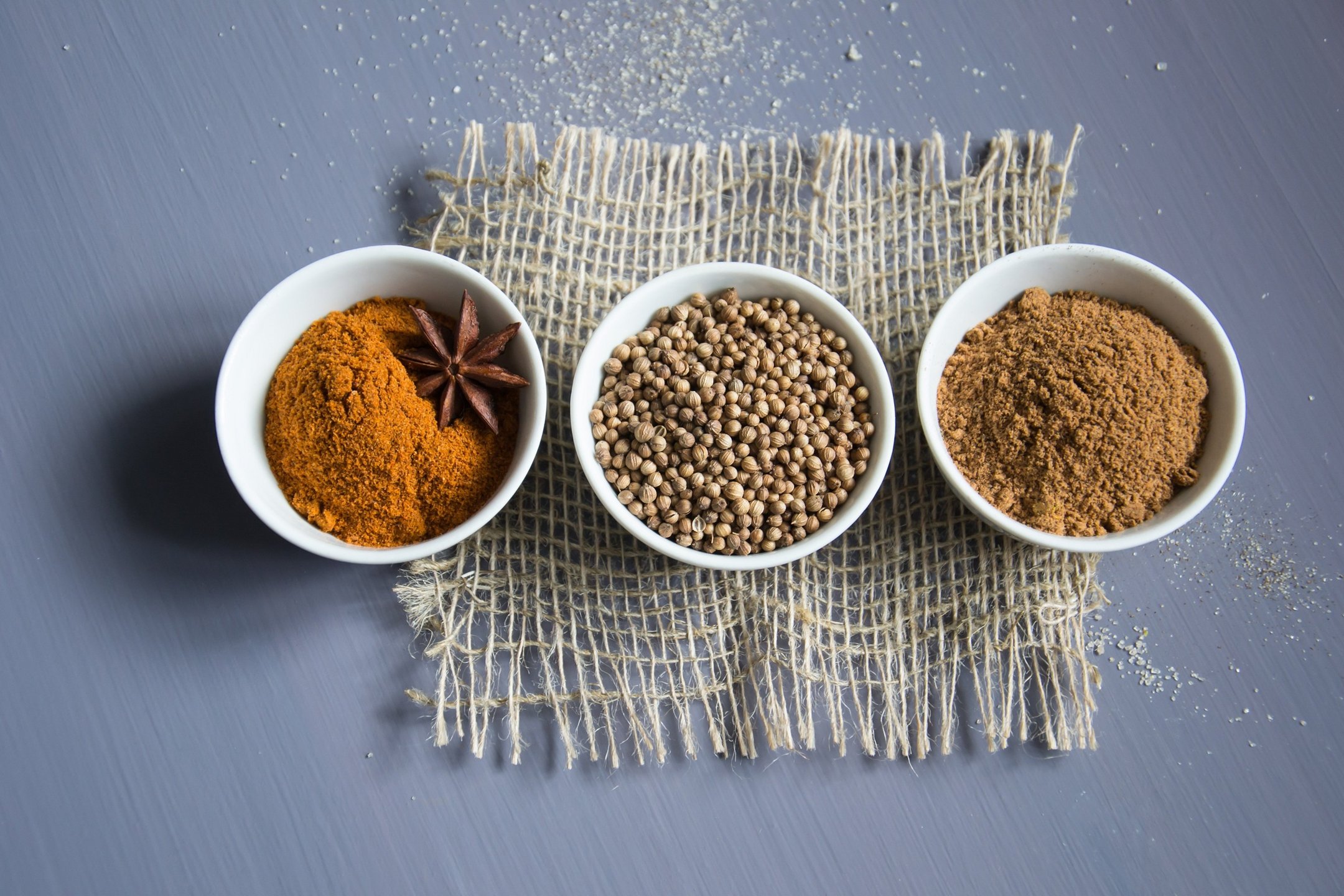
Cuminum cyminum, called Jeeraka in Sanskrit and Jeera in Hindi are one of the herbs that have been used for many centuries for various ailments. Traditionally, the herb is well-known for its action in various alimentary diseases like indigestion, diarrhea, gynecological diseases, etc. This herb is also screened for various pharmacological activities like antibacterial, anticancer, antiulcer, and others. Due to its hot potency and penetrative essential oils, it is a choice of the herb for the cure of various indications like Indigestion, Carminative, improve digestion, inflammations, diarrhea, noisy gut, but it has been directly established as an herb of choice in GIT associated menstrual disease.
In traditional medicine, cumin was used to treat hoarseness, jaundice, dyspepsia, and diarrhea. Its seeds were used for stomach, diuretic, carminative, stimulant, astringent, and abortifacient properties. Due to its incredibly good aroma, the oil of cumin was used in perfumery and as a seasoning in curry powders, soups, stews, sausages, cheeses, pickles, meats, and chutneys for centuries in all parts of the world. In America, Africa, and India, the herb is used as an abortive and as an emmenagogue. In Indonesia, it was used in cases of bloody diarrhea and headache (the paste is applied to the forehead). It was also taken orally for rheumatic ailments. In India, cumin was used as an abortifacient, for kidney and bladder stones, chronic diarrhea, leprosy, and eye disease. In the Unani system of medicine, the fruits of the Cuminum cyminum were used as an astringent, carminative, and emmenagogue for the treatment of corneal opacities, ulcers, boils, styes, and to relieve cough and inflammation.
Some of the recipes of Cumin Ayurveda preparations are as follows :
- Cumin powder (dry roasted) 1/4 tsp + Dry ginger powder 1/4 tsp + Natural honey 1 tsp – for Kapha problems or cough and congestion
- Cumin powder (dry roasted) 1/4 tsp + Jaggery 1tsp – for Digestion problems and low appetite
- Cumin powder (dry roasted) 1/4 tsp + Coriander seed powder (dry roasted ) 1/4 tsp + Hot water 1 cup – for cleansing the Urinary tract
- Cumin powder (dry roasted) 1/4 tsp + Lime juice 1 tsp – for Kapha and Vata problems
Ginger / Adraka
Ginger (Zingiber Officinalis), called Adraka in Sanskrit and Adrak in Hindi one of the most commonly consumed dietary condiments in the world. Ginger has also been used for thousands of years for the treatment of numerous ailments, such as colds, nausea, arthritis, migraines, and hypertension. The medicinal, chemical, and pharmacological properties of ginger have been extensively reviewed by various institutions all around the world for its extensive medicinal usage and healing effects. Ginger is a member of a plant family that includes cardamom and turmeric. Its spicy aroma is due to the presence of ketones, Gingerol.
Indians and Chinese are believed to have produced ginger as a tonic root for over 5000 years to treat many ailments, and this plant is now cultivated throughout the humid tropics, with India being the largest producer. Ginger was used as a flavoring agent long before history was formally recorded. It was an exceedingly important article of trade and was exported from India to the Roman Empire over 2000 years ago, where it was especially valued for its medicinal properties.
Ginger is used in numerous forms, including fresh, dried, pickled, preserved, crystallized, candied, and powdered or ground. The flavor is peppery and slightly sweet, with a strong and spicy aroma. The concentration of essential oils increases as ginger ages.
One of the many health claims attributed to ginger is its ability to decrease inflammation, swelling, and pain. Ginger decreases age-related oxidative stress markers and, due to its antioxidant properties, helps to reduce free radicals. The essential oils in ginger help alleviating symptoms of nausea and vomiting throughout history is its use as the best remedy. Ginger and its derivative components have shown excellent and interesting cancer-preventive and potential cancer therapeutic applications. Ginger has gained interest in its potential to treat various aspects of cardiovascular disease. Useful for the treatment of various gastrointestinal, pulmonary, cardiovascular, sexual disorders, antibacterial, antidiabetic, antiemetic, hypolipidaemic, and hepatoprotective, Ginger is considered among the best of roots in Ayurveda.
Some of the recipes of Ginger Ayurveda preparations are as follows :
- Fresh ginger juice 1 tsp + Fresh holy basil leaves juice 1 tsp + Natural honey 1 tsp – for respiratory problems, such as dry cough, and Flatulence
- Fresh ginger paste + Jaggery – for sprains and inflammation without an open wound (applied externally)
- Fresh ginger sliced + Hot water 1 cup – for lack of digestion, and Vata problems.
- Fresh ginger juice + Brown sugar 1 tsp – for Kapha problems, common cold, and cough
Avoid Indigestion / Adhyashana
Adhyashana is a technical term of Ayurveda, which means eating before the digestion of previous food. All the ancient classics describe the ill effects of Adhyashana. Charaka mentioned it as a prime causative factor for Grahani dosha. It is also said that Adhyashana can cause severe and incurable diseases or even death. All these references show the importance of Adhyashana as one of the health-destroying factors.
The food, which is eaten, while the earlier meal is lying undigested in the stomach, at once provokes all three Doshas. These aggravated Doshas then produce various kinds of diseases in the body. Repeated meals at irregular intervals are the very cause of Aama production ( free radical). Aama decreases the strength of Agni, which in turn obstructs the free movement of all three Doshas in the digestive tract, and on the other hand, spreads in the whole body and blocks the channels of the entire body.
In a research conducted by an Institute in Jamnagar, India,70% of the subjects revealed that lack of appetite and ingestion were the major pre disposed entity found among the patients with chronic lifestyle and infectious diseases, such as fever of unknown origin, general lack of immunity, frequent infections of the chest and respiratory organs, and skin diseases.
Adhyashana can be defined as eating within 3–4 h of the earlier meal. So, a proper light meal has to have at least a break of 4 hrs. between each meal, even considering snacks and coffee consumption. Drinking a small quantity of hot to warm water at regular intervals is said to have a positive effect on the digestive system, hence aiding proper digestion.
Cleanse Free Radicals / Ama
Ama iti Ishyath Pachyathe – meaning Ama or the free radicle is the product of indigestion. It is being described in one of the texts of Ayurveda that “eliminate that which is not wholeness, that which is disrupting, by that which is suitable for the self, using procedures and preparations to restore the self, to re-establish Prakriti (a wholeness — our essential nature) and pacify by that which is conducive to health.”
Ama can also be the one derived by the regular blockage of the free radicals in the deep channels of nutrition, or even due to external environmental or idiopathic causes.
The main cause for the formation of Ama is described to be Pragya aparadh – the mistake of the intellect or the lack of self to understand our Dosha and body types, and the capacity of our digestive systems. These very mistakes lead to poor diet, wrong choice of food, wrong eating habits, overeating, unnecessary cravings, emotional eating, and wrong routine.
The feeling of laziness, disinterest, with no enthusiasm, lack of orientation, brain fog, lack of clarity, lack of concentration, negative thoughts, which can lead to anxiety, and also Psychosomatic diseases such as bloated gut, lazy gut, constipation, IBS, diarrhea, and many other diseases related to the Digestive system.
Some of the tips mentioned in Ayurveda texts for cleaning the Ama are as follows :
- Loving your food with the right ingredient at the right time, with the right state of mind, or following Satvik food
- Avoid emotional eating. Overeating, ice-cold food, heavy and sticky food
- Ama Pachan (digesting the ama ), by sipping hot water, or using specific spices or herbal preparations
- Agni Dipan (increasing the digestion ), with the use of Lavana Bhasker powder, Cumin powder, Hingwashtaka powder
- Shodhana or Cleansing with Panchakarma Detox
“See more of our interesting activities on YouTube”